Flux

Introduction
Flux is a digital experience agency specializing in immersive web installations and interactive art. Their work pushes the boundaries of what's possible in a browser — generative art, real-time 3D, responsive sound design, and data-driven visualizations that transform abstract information into sensory experiences. Each project they deliver is technically ambitious and conceptually rich.
Their portfolio spoke for itself within the creative technology community, but they had no cohesive brand to tie it together. Each project was a standalone masterpiece with its own visual world, its own color palette, and its own design language. Visiting their website felt like browsing an anthology of unrelated artists rather than the work of a single studio with a unified creative vision.
This lack of cohesion was becoming a business problem. Potential clients — brands seeking interactive campaigns, museums commissioning digital installations, technology companies wanting experiential launches — couldn't immediately grasp what Flux stood for as a studio. They could see that each project was impressive, but the absence of a connecting thread made it difficult to understand the studio's point of view or predict what working with them would be like.
We needed to create an identity flexible enough to encompass wildly different projects while maintaining a recognizable thread across everything. The brand couldn't be rigid — any fixed visual system would conflict with projects that each demand their own aesthetic. But it couldn't be invisible either — the studio needed a presence that clients and collaborators could identify and remember.

Process
Defining the Thread
The common element across all of Flux's work isn't visual — it's behavioral. Their projects respond, adapt, and evolve in real-time. A generative art piece reacts to ambient sound. A data visualization shifts as new information flows in. An interactive installation changes based on the viewer's proximity and movement. The brand needed to embody this responsiveness rather than imposing a static visual style.
We spent two weeks documenting the behavioral patterns across their portfolio: how elements move, how systems respond to input, how complexity emerges from simple rules. This analysis revealed that every Flux project shares a common DNA — the tension between structure and spontaneity, between rules and the unexpected outcomes those rules produce. That tension became our conceptual foundation.
Generative Identity
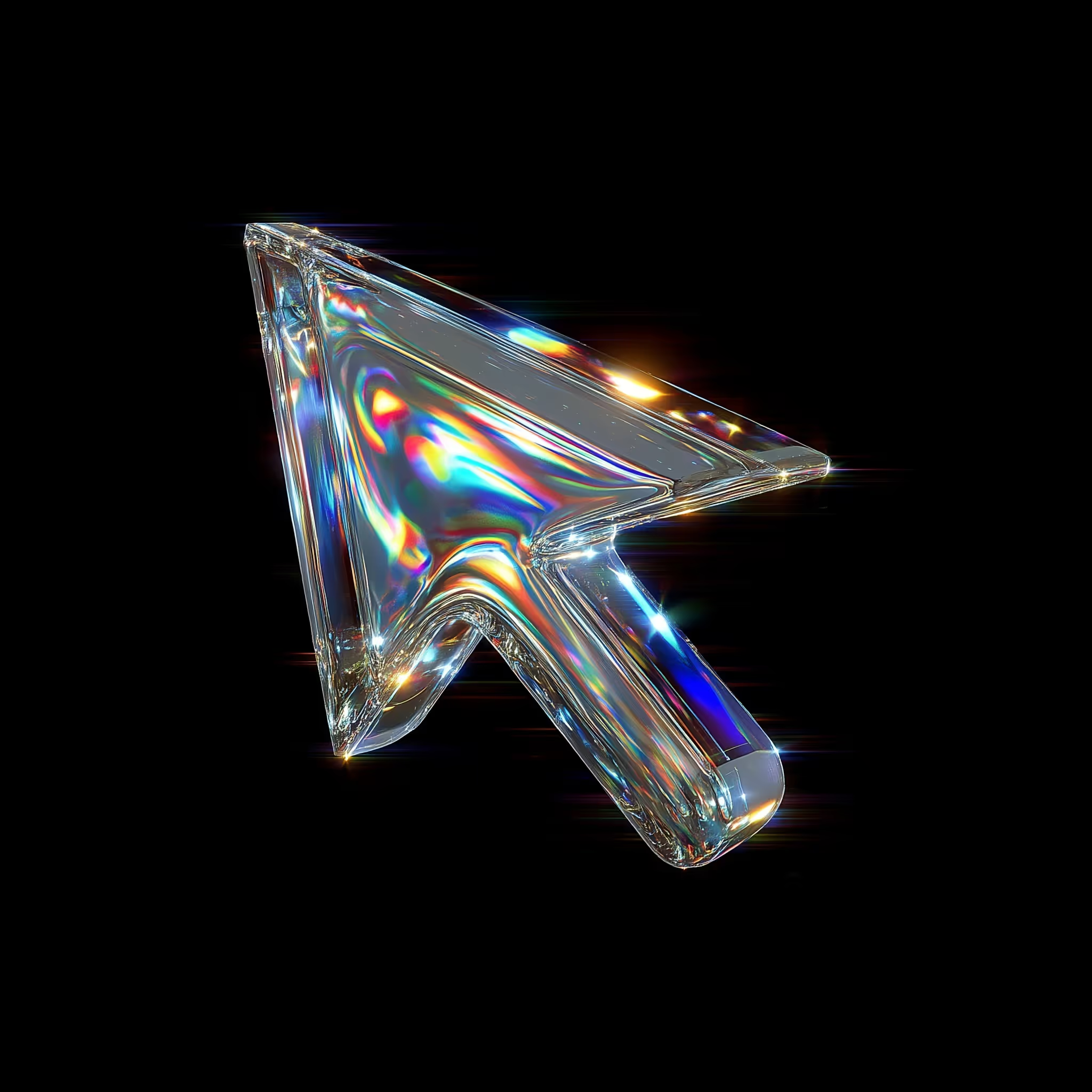
The logo is a living system rather than a fixed mark. Built on a set of mathematical rules rather than fixed coordinates, it generates unique variations while maintaining recognizability. The 'F' and 'X' serve as anchor points — structural constants that ground the composition. Everything between them shifts and flows, generated algorithmically from parameters that change based on context.
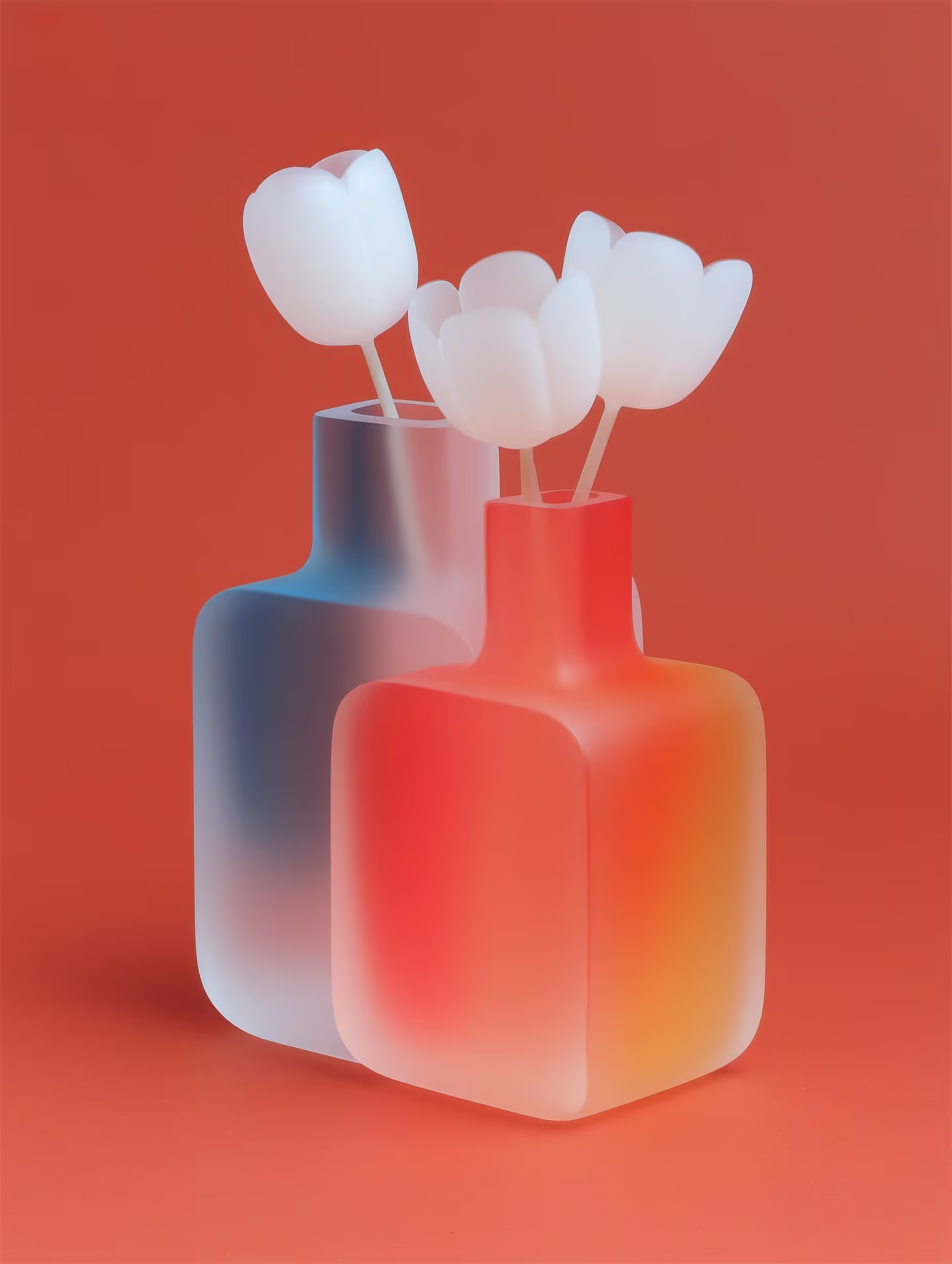
The brand colors are reactive rather than prescribed — a core palette that shifts based on context: time of day on the website, content type in presentations, ambient conditions in physical installations. The color system has boundaries — hue ranges, saturation limits, contrast requirements for accessibility — but within those boundaries, the expression is always unique. No two encounters with the Flux brand look identical, but all of them feel unmistakably Flux.
The typography is the one fixed element — a monospaced typeface that references code and computation, grounding the generative visual expression in the technical craft that makes it possible. This single constant gives the eye something to anchor to while everything else evolves around it.
Portfolio System
We designed a portfolio framework that gives each project its own visual world while maintaining consistent navigation, typography, and spatial logic. The transitions between projects are themselves interactive experiences — generative animations that blend the visual DNA of the project you're leaving with the one you're entering. The portfolio becomes a continuous experience rather than a collection of separate pages.
The framework also includes a standardized project metadata structure — technology stack, team size, timeline, collaboration credits — that gives potential clients practical information in a consistent format, regardless of how visually different each project appears. This consistency in the utilitarian elements makes the creative diversity feel intentional rather than chaotic.

Conclusion
The generative identity became Flux's calling card. Potential clients experienced the brand's capabilities before seeing a single portfolio piece — the logo animation on the homepage, the reactive color system, the interactive transitions between pages. The identity itself was the proof of concept, demonstrating what the studio could do through the very medium they were being hired to work in.
Within a year, Flux doubled their team size and expanded into physical installations — a new market opened precisely because the brand could adapt to any environment. The generative identity system worked on screens, in projections, on printed materials, and in spatial installations. Each medium received a native expression of the same underlying rules, making the brand feel purposeful everywhere rather than forced into contexts it wasn't designed for.
The project also established a new model for how creative technology studios can approach branding. Rather than choosing between a rigid identity that constrains their work and no identity at all, Flux proved that a rule-based system can be simultaneously recognizable and infinitely variable — exactly the kind of solution their clients hire them to create.
"Most agencies get a static logo. Gallery gave us a living system. It's the most honest representation of what we do that we could imagine."
— Anna Petrova, Co-Founder, Flux Interactive